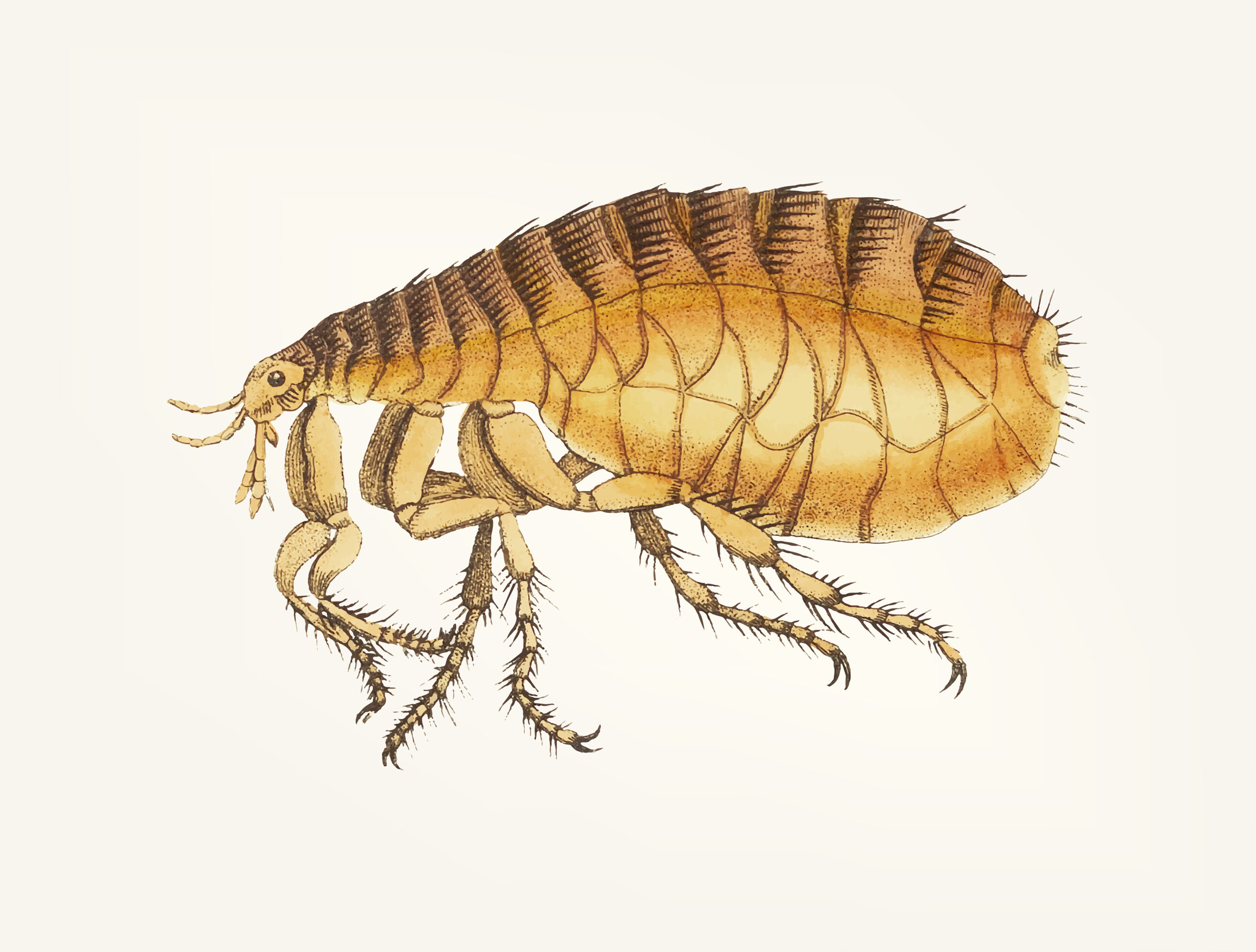
Ever feel frustrated by those small, jumping insects that can bother pets and sometimes even people? We’re talking about fleas, of course. These flightless bugs are usually just a few millimeters long and reddish-brown. But beyond being a bit of an annoyance, fleas have a very interesting life cycle. They’ve been around for a surprisingly long time, can jump really far for their size, and feed on blood. In fact, fleas can teach us some surprising things about the natural world. So, let’s take a closer look at eight interesting facts about these tiny jumpers. You might be surprised at what you learn!
8 Fascinating Facts About Fleas
1. Fleas Played a Role in Spreading the Black Death
The Black Death, a devastating illness that swept through Europe during the Middle Ages, caused the deaths of millions of people. In just two years, London lost a significant portion, around 20%, of its population due to the disease. You might be curious how tiny fleas became involved in this tragedy.
Many rodents and other animals became infected with the bacteria that caused the Black Death. These animals also served as food sources for fleas. When the infected animals died, the fleas looked for new hosts, and unfortunately, humans were readily available. This unintentional behavior by the fleas helped spread the infection quickly.
2. Fleas Reproduce Quickly
Fleas are known for their rapid reproduction. Throughout their short lifespan, a single flea can lay up to 2,000 eggs. This means a small number of fleas in bed or on a pet or any surface and can quickly become a much larger problem. An adult flea can lay up to 50 eggs each day on your dog or cat. Similar to mosquitoes, bed bugs, and other pests that feed on blood, fleas latch onto their hosts and are difficult to remove.
3. Fleas Have a Long History
Fleas have a surprisingly long history! Fossils found in Mongolia and China show that fleas were around as early as 165 million years ago. These fossils even suggest that fleas lived alongside dinosaurs during the Mesozoic era.
Unlike the fleas we know today, these ancient fleas weren’t amazing jumpers. They didn’t have the same specialized hind legs that modern fleas use to leap around. The fossils show that these early fleas got around by crawling. There were also size differences between ancient and modern fleas. While some ancient fleas were larger than today’s ones, the fossils don’t necessarily mean all were giants.
4. Fleas Don’t Discriminate About Who They Bite
An interesting (but not entirely accurate) fact about fleas was shared in the Los Angeles Herald in 1895. The article claimed fleas preferred to bite women, children, and people with thin skin. This isn’t quite true! Fleas are happy to feed on any blood source they can find. They’re attracted to the vibrations caused by people and pets walking around, as well as the carbon dioxide we breathe out. So, if the fleas sense a meal nearby, it will jump towards it, regardless of whether it’s a man, woman, or child.
5. Fleas are the Jumping Champions
One thing fleas excel at is jumping! The average flea can jump an impressive 8 inches horizontally, with some reported to reach even further – up to 20 inches! The jumping ability actually varies depending on the flea species. For example, dog fleas are known to jump further than their cat counterparts.
This incredible jumping ability is what makes fleas such a nuisance for pets. Their strong legs allow them to launch themselves off the ground or blades of grass and land right on their furry host. Unfortunately, this can also lead them into your home when your pet comes inside.
6. Fleas are Almost Blind
Did you know fleas can’t actually see the world like we do? Instead, their tiny eyes, called ocelli, can sense changes in light and dark. They’re most sensitive to greenish-yellow light, with wavelengths between 300 and 600 nanometers. Fleas also don’t have ears, but they can feel vibrations with special hairs on their bodies.
7. Fleas Mostly Live on Animals
There are different types of fleas, like those that often live on cats (called Ctenocephalides felis) and those found on dogs (Ctenocephalides canis). But even though their names mention specific animals, cat fleas can also live on dogs and other furry friends.
Dog fleas are more common in Europe. If your pet, whether it’s a cat or dog, is scratching a lot or has sores, it might have fleas. While fleas can bite people sometimes, they much prefer to feed on the blood of your furry companions. If you find flea bites on yourself, it’s likely because the fleas are living on your pet.
8. Fleas Like Moisture
Fleas don’t do well in dry places, which is why they’re less of a problem in areas with very little rain, like some deserts. Dry air makes it take longer for fleas to develop from eggs to adults. If the air has less than 60% or 70% moisture, flea eggs might not even hatch. On the other hand, if there’s a lot of moisture in the air, fleas develop much faster. Knowing this can help you fight a flea infestation. Trying to dry out the air in your home can make it harder for fleas to survive.
Closing Thoughts
So, there you have it! Eight fascinating facts about those tiny terrors, fleas. From their ancient past to their impressive jumping skills, these blood-sucking insects have a surprising amount to teach us about the natural world. While we might not enjoy their presence on our pets or ourselves or keeping these bugs out of our home could be a daunting task, understanding a bit more about fleas can help us keep them at bay.