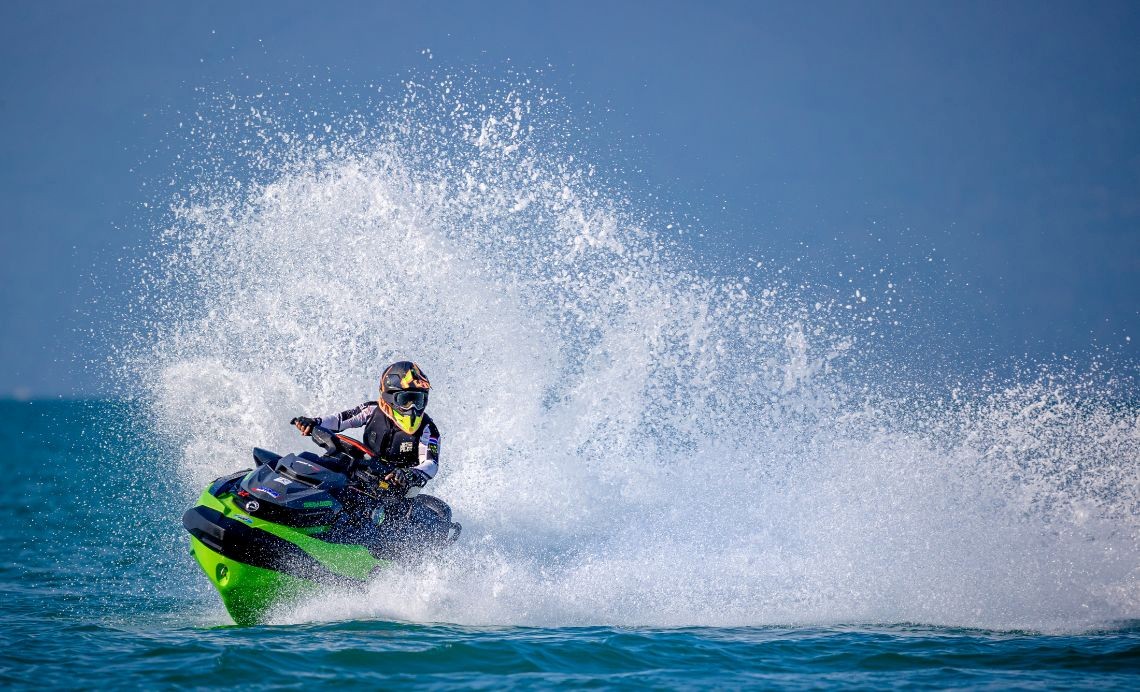
You wouldn’t bring a dirt bike to a drag race, so why ride a jet ski or drive a boat that doesn’t match your style? Whether you’re carving through tight turns, towing your kids on a tube, or going full throttle across open water, your experience depends heavily on what’s under (and in) your ride.
From the hull weight to horsepower output, here’s why watercraft weight and power matter for your riding style, and what you should watch for before your next adventure.
Speed Freak or Smooth Cruiser?
Let’s talk riding style. If your weekend goals involve jumps, spins, and aggressive cornering, then you’ll want a lighter, more agile setup. Lighter hulls respond faster and feel snappy, but they can get twitchy at high speeds or in choppy water.
But what if you prefer something steadier for long rides or family fun? Heavier models handle wind and waves more effectively, providing a smoother ride. The trade-off, though, is slower acceleration and less responsiveness in tight turns. Add more horsepower, and you can balance out that bulk, but the ride still won’t feel the same as a featherweight wave runner zipping across glassy water.
Power-to-Weight Ratio Isn’t Just a Fancy Term
Horsepower numbers might look good on paper, but without considering weight, you’re missing half the story. A 200-horsepower engine pushing a 700-pound craft isn’t going to launch like the same engine on a 400-pound hull. That’s where the power-to-weight ratio glides in.
Power-to-weight ratios directly impact throttle response, top speed, and how your toys climb out of the water. If your craft feels sluggish despite big numbers on the spec sheet, odds are it’s hauling more weight than the engine wants to move efficiently. In short: balance matters.
Not All Engines Ride the Same
Let’s clear up something riders often overlook when customizing or upgrading: engine type. Anyone comparing 2-stroke and 4-stroke cylinder head engines quickly sees differences in weight, torque curve, and maintenance.
Two-stroke engines are typically lighter and pack a punch in a smaller package. That makes them great for tricks and tight turns. However, they require premixed fuel or oil injection, and they generally require more frequent maintenance.
Four-stroke engines are heavier but more fuel-efficient and quieter. They tend to shine on longer rides or when you’re towing—a solid pick for boaters who spend more time cruising than carving. You’ll want to change the oil every 100 hours, give or take, and pay attention to valve inspections around the 15-hour mark.
Don’t Chase Horsepower Alone
There’s a sweet spot between weight, power, and engine type, and it’s different for everyone. So, if you’re chasing raw horsepower without thinking about the ride you actually want, you’re setting yourself up for disappointment. Sometimes, a 90-horsepower craft on a lightweight frame delivers a better experience than a 300-horsepower beast that rides like a barge.
That’s why watercraft weight and power matter for your riding style. A little upfront research will save you from spending next year’s summer vacation fighting a machine that never quite feels right.